
Underinflated or overinflated tires
WARNING
Tires with pressure that is too low can overheat and burst as a consequence. In addition, they also suffer from excessive and/ or irregular wear, which can severely impair the braking properties and the driving characteristics. There is a risk of an accident.
Avoid tire pressures that are too low in all the tires, including the spare wheel.
Underinflated tires may:
• overheat, leading to tire defects
• have an adverse effect on handling
characteristics
• wear quickly and unevenly
• have an adverse effect on fuel consumption
Overinflation
WARNING
Tires with excessively high pressure can burst because they are damaged more easily by road debris, potholes etc. In addition, they also suffer from irregular wear, which can severely impair the braking properties and the driving characteristics. There is a risk of an accident.
Avoid tire pressures that are too high in all the tires, including the spare wheel.
Overinflated tires may:
• increase the braking distance
• have an adverse effect on handling
characteristics
• wear quickly and unevenly
• have an adverse effect on ride comfort
• be more susceptible to damage
Maximum tire pressures
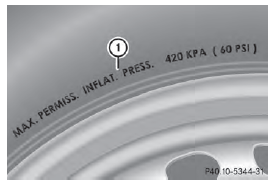
1 Example: maximum permissible tire pressure
Never exceed the maximum permissible tire inflation pressure. Always observe the recommended tire pressure for your vehicle when adjusting the tire pressure .
The actual values for tires are vehiclespecific and may deviate from the values in the illustration.
See also:
SmartKey
...
Driving on wet roads
Hydroplaning
If water has accumulated to a certain depth
on the road surface, there is a danger of
hydroplaning occurring, even if:
• you drive at low speeds.
• the tires have adequate tread dept ...
Problems with the side windows
WARNING
Closing the side windows with increased force
or without the anti-entrapment feature could
lead to serious or even fatal injury. Make sure
that nobody can become trapped when
closing the ...