
Maximum load rating
 WARNING
Do not overload the tires by exceeding the
specified load limit as indicated on the Tire
and Loading Information placard on the
driver's door B-pillar. Overloading the tires
can overheat them, possibly causing a
blowout. Overloading the tires can also result
in handling or steering problems, or brake
failure.
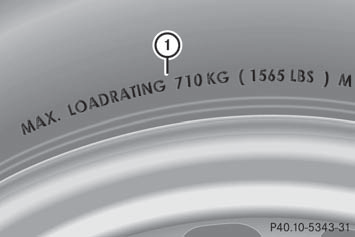

The actual values for tires are specific to
each vehicle and may deviate from the
values in the illustration.
Maximum tire load 1 is the maximum permitted weight for which the tire is approved.
Further information on tire loads.
See also:
Tachometer
Do not drive in the overrevving range, as
this could damage the engine.
The red band in the tachometer indicates the
engine's overrevving range.
The fuel supply is interrupted to protect the
...
Sports Utility Vehicle
WARNING
This Sport Utility Vehicle is designed for both
on-road and off-road use. It can go places and
perform tasks for which conventional 2-wheel
drive passenger cars are not intended. This
veh ...
Setting the rear-compartment air
vents
► To open/close: turn thumbwheel 1 up or
down.
► To set the air direction: move slider 2
for the corresponding rear-compartment
air vent to the left, right, up or down. ...